Showing posts with label Book Review. Show all posts

Tuesday, June 11, 2013

Bye Bye Baby by Max Allan Collins


Bye Bye Baby is another great novel in the Nathan Heller series by Max Allan Collins. When we first met Nathan Heller in True Detective it was the early 1930s. Through the years he has worked a lot of famous cases. Now he is on the scene with the lovely, vivacious Marilyn Monroe. Marilyn is an old friend and calls Nathan to help her with a little job. She wants her phone bugged. She is having a lot of trouble with her studio, Fox, and she wants to protect herself. Heller’s favor for a friend turns into much more. This book reads like a Who’s Who from the period. Heller deals with Joe DiMaggio, Frank Sinatra, Hugh Hefner, John and Robert Kennedy, and many others.

One of Collins’ strengths is his ability to throw lots of celebrities into a book without stretching too much credulity. Of course Heller has to bed Marilyn and at least two other women. This should surprise no one who has read the Heller novels. Heller falls into the category of men who have slept with both Jayne Mansfield and Marilyn Monroe. If the book is to be believed then he shares that honor with the Kennedy boys.

Bye Bye Baby is a sympathetic look at Monroe. She is truly a tragic figure and her treatment at the hands of the movie studios and the Kennedy brothers was shameful. Collins tries, and succeeds, to navigate his way in this book between the pro and anti Kennedy camps. Perhaps the most interesting thing of all is the real humanity of the characters. That is one of the trademarks of the Heller novels. The celebrities are not just here to catch our interest, they have a realness about them. So who killed Marilyn Monroe? Was it suicide, an accidental overdose, the Kennedys, or someone else. You will just have to get the book and find out.

Friday, May 31, 2013

Wicked River: The Mississippi When It Last Ran Wild by Lee Sandlin


Old Man River. The Father of Waters. The Big Muddy. These are all names that are used for the great river of North America: The Mississippi. The Mississippi River has been an important part of the history, literature, commerce, and myth of the United States for generations. At the end of the War of Independence it became the western boundary of the United States. The navigation of the river was vital to the settlers who moved west of the Allegheny Mountains after the war. After the Louisiana Purchase the Mississippi became the most important waterway in the United States. It was used to move manufactured goods and produce. To move these goods a hardy breed of person was needed. The men and women who worked, travelled, and lived on and along the river river a hardy and wild lot.

Wicked River tells the story of these rowdy people. Perhaps I should say that it tells the stories of the the river people. The book is not really arranged as a continuous narrative, but rather tells a number of different stories about people and events along the river.  The Mississippi River is known to many as the setting of classic Mark Twain stories like Tom Sawyer and Huckleberry Finn. Sandlin starts off with a disadvantage. In the opening of the book he relates his own ignorance of Twain and seems to be almost proud of the fact. This seems odd in a writer who has chosen the Mississippi as his subject. Even more strange is that he didn’t re-read Twain for this project. It is a pity because many of the stories that he relates and many of the character types that he discusses can be seen throughout Twain’s books. In fact if you first read Twain this book will be a little more fun.

Sandlin is a good writer and he does seem to enjoy his subject. He relates stories of river pirates, bandits, rogues, and murderers. The river was a deadly place. He also shares stories about those who settled along the river. The Mississippi seemed to have a very violent culture. I learned some interesting things about the river I did not know. I have lived near the Mississippi for much of my life, yet I did not know that the temperature of the river in the current never gets much above 40 degrees. Anyone falling into the river will not last long before hypothermia kicks in. I was also fascinated by the stories of some of the river pirates. I was reminded of an old Davy Crockett video my grandmother bought me when I was a kid. I was also intrigued by the stories of frontier justice. The lynching courts, the swift and brutal justice, these were aspects of river life I had not read about before.

Wicked RIver is not a great book. It is a good book and it covers a fascinating period in American history. Even a history lover like myself can find new and wonderful stories.

Tuesday, May 28, 2013

The Man With The Golden Gun by Ian Fleming (A James Bond Novel)


At the end of You Only Live Twice James Bond had killed his nemesis Blofeld. In the process he also received a head injury that left him with amnesia. He stayed for some time with the young diver who saved him. On the last page of the book he is headed to Russia because he believes that there is something there that will remind him of who he is. The Man With The Golden Gun picks up a few months later. It seems that Bond made his way to the Soviet Union and was captured, interrogated, brain washed, and sent back to kill M.

M doesn’t trust the situation and is able to thwart the attack. Bond is fixed up and now M has to decide what to do with him. He decides to send him after a hired killer known as Saramanga. This assassin has come across M’s desk It is believed that it will be nearly impossible to succeed with this task. In his rather callous manner M decides that Bond will either succeed and redeem himself, or die in the attempt and redeem himself. Bond is anxious to strike back at the machine that turned him against M. He tracks his prey to Jamaica and sets about his task.

This is the last of the James Bond novels. It was still in manuscript form when Ian Fleming died. It is not the best of the Bond books. Scaramanga is not the twisted fiend or evil genius that we usually see Bond going after. He is simply a thug who is good with a gun. While the villain may be a bit flat at times there are some interesting scenes with Bond as he tries to get over what happened to him. While the James Bond novels might not be high literature they are great spy stories from the Cold War and they can still entertain 50 years after their initial publication.

Saturday, May 25, 2013

The Guns at Last Light: The War in Western Europe, 1944-1945 by Rick Atkinson


It seems that we will never run out of new books about World War II. That is not a bad thing. World War II saw more combatants than any other war in history. It affected a large percentage of the world’s population. Much of the war was fought between literate soldiers, officers, and civilians on both sides. This has left us with a mountain of material. Every author has his own reading and prejudices that he brings to the study. This means that we will receive many different views of the same subject. Rick Atkinson’s The Guns At Last Light: The War In Western Europe, 1944-1945, brings us his view of the war. The book starts with the invasion plans for Normandy. Atkinson goes in to a lot of detail about the logistical troubles that the allies had to prepare for what would be the largest amphibious assault in history. The information on D-Day itself and the Normandy campaign is very comprehensive, but not overwhelming with minutiae. The author points out the successes and failures of the campaign. One of the great failures was the lack of preparation by the commanders for dealing with the hedgerow country.

Many books on the campaign in France tend to focus on the Normandy campaign and the subsequent breakout. There was a subsequent invasion of the south of France known as Operation Dragoon. Atkinson spends a good deal of time talking about Dragoon. He also spends a lot of time discussing Operation Market Garden. Market Garden was one of the more controversial campaigns of the war and it is covered quite well here. One of the reasons Eisenhower was willing to try Market Garden was the need to stop the new rockets that Germany had developed. First the V1 then the V2 rockets were causing a lot of havoc in London. The other reason was the need to gain Antwerp. Logistics was a nightmare for the Allied force. The port in Antwerp would significantly increase the supply capacity.

The Battle of the Bulge is portrayed in the book as the greatest failure of Allied intelligence during the war. The Battle is portrayed in very vivid scenes. This section contains some of Atkinson’s best prose. One can almost feel the cold when reading the book.

Atkinson spends a lot of time discussing generals who are not as well known to the general reader. Almost everyone has heard of Eisenhower, Patton, Bradley, and Montgomery. Here we also get to see generals like Roosevelt, Truscott, Hodges, Devers, and others. Atkinson is obviously not a fan of Omar Bradley and never passes up a chance to criticize him. He tries to be fair to Montgomery, but it is hard. I’m not sure that it is possible to portray Montgomery accurately and in a positive light. There are a lot of stories about the British intrigues against Eisenhower. The British never approved and never understood Ike’s large front strategy. They always favored a narrow front with a heavy strike force. Of course they also wanted Monty in charge of it. Eisenhower knew better. Ike favored the same kind of battle order that Grant used in the Civil War. He knew that the Germans simply didn’t have the manpower to hold the entire front.

The Malta and Yalta conferences are the subject of a chapter and they help to set the stage for the end of the war. It is interesting to see the interaction of the three leaders (Roosevelt, Churchill, and Stalin) as the decide the fate of Europe in the post-war. The section on the liberation of the concentration camps is also very well done and very interesting. I was intrigued to lean that at Buchenwald American troops and officers took it on themselves to kill a number of SS troops who surrendered. The only really weak point in the book occurs here. Atkinson seems outraged by the actions of the American troops and seems them as simply murderers. His language gives the impression that it makes them no better than the SS thugs that they killed. I think that the context certainly gives the lie to any such moral equivalency. The GIs were well aware that the SS had massacred American POWs during the Battle of the Bulge. Now they see this fresh hell and in front of them are the men who committed the atrocities. I doubt that any of the soldiers who took part in the executions slept poorly over what they did.

That one criticism aside this is an excellent book. Atkinson’s style is easy to read and the information is presented in such a way that the average reader will not be overwhelmed. He tries on the whole to give a thorough look at the campaign and the players. This should not be the only book that you read on this subject, but it is a book that you should read. 

Friday, May 24, 2013

All The Great Prizes by John Taliaferro


John Hay is one of the most important individual to ever hold the office of Secretary of State. He spent a lifetime serving his nation. In All The Great Prizes John Taliaferro traces the life of this fascinating man. After finishing at Brown Hay went to work for his uncle’s law office in Springfield, Illinois. The office next door was occupied by Abraham Lincoln. Hay was hired as one of Lincoln’s secretary during the campaign. The other secretary, John Nicolay, was a friend from Hay’s teenage years.

After Lincoln’s election Hay and Nicolay accompanied Lincoln to Washington. They lived in the White House and served Lincoln until his death. Taliaferro gives a lot of time to this parr of Hay’s life. The stories about Lincoln are really great. Hay saw him as a person and so the intimate look at Lincoln was very moving. Taliaferro also mentions the troubles that the secretaries had with Mary Lincoln, who hated them both. Hay become friends with Robert Lincoln, the President’s oldest son, and they two of them were together when they were summoned to the dying president’s bedside.

Hay’s story continues after Lincoln’s He served as secretary to the legation in Paris for a year, then he was sent as a temporary head of the legation to Austria. While in Austria he saw the dangers inherent of crumbling empires bolstering themselves up with large armies.“The great calamity and danger of Europe today are those enormous armaments,” he observed. “No honest statesman can say that he sees in the present attitude of politics the necessity of war. No great Power is threatened.  .  .  . Why then is the awful waste of youth and treasure continued? I believe from no other motive than to sustain the waning prestige of Kings.” This would continue until it resulted in the First World War.

Taliaferro gives us a wonderful insight into the man. Hay was a gregarious person with an elitist personality. Among his friends were men such as Henry Adams and Henry James. Hay was an author of some note. He wrote a few novels and poems, not all good, but some were considered classics. Along with John Nicolay he published a ten volume biography of Abraham Lincoln. Hay’s personal life is quite interesting. He seemed to have several affairs of the heart, though they were unlikely consummated, with some intriguing women.

When it comes to the last decade of his life Taliaferro shows how Hay worked ceaselessly to avoid war. Hay’s nature was not aggressive but congenial. He preferred to work out deals that helped to keep the peace. Hay had spent the early days of his political career watching the Civil War and never wanted to see war on that scale again. We see the amazing work that Hay did for William McKinley and Teddy Roosevelt.

All the Great Prizes is a well written book. I was amazed at how much information is contained in these pages, yet the writing is never dry. Hay was truly one of the greatest statesmen ever to serve the United States of America. Taliaferro has given us an excellent book on a fascinating subject. Do yourself a favor and pick up this book.

Thursday, May 23, 2013

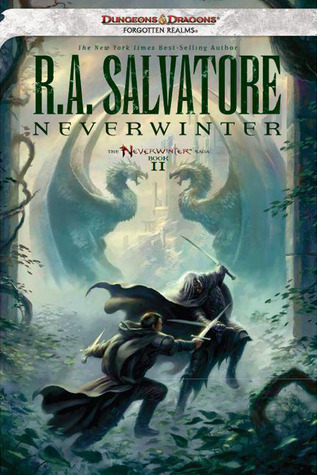
Neverwinter by R. A. Salvatore (Neverwinter Book II)


Neverwinter, the second book in R. A. Salvatore’s Neverwinter series, picks up where Gauntlgrym left off. The last of Drizzt’s old companions are gone. King Bruenor fell in battle as he worked to stave off another great cataclysm. Now for the first time in a century Drizzt is free. He is no longer tied down by anyone. Now he is traveling with the deadly female elf warrior Dahlia. First they travel to Waterdeep to try and find some trace of Jarlaxle. While they are unable to locate the mercenary Drow they are able to run into a great deal of trouble. Old enemies of Dahlia attack them and they are forced from the city. Next they travel to the woods outside Neverwinter. Here they have come to do battle against the evil Sylora Salm. Before the novel is over Drizzt and Dahlia will be forced to deal with Sylora, the lich Valindra Shadowmantle, who is slowly regaining her sanity, and they will have to deal with the killer known as Barrabus. Meanwhile Barrabus is operating in Neverwinter. A great secret will be revealed concerning this mysterious killer.

Neverwinter is a good book. It is a major step for Drizzt. Now that he is free of his friends, and dealing in a world that is descending deeper in to chaos Drizzt needs more than ever to find something good to cling to. He will be hard pressed to find the goodness in Dahlia. She is constantly pushing him to let loose. The battle of ideas is Drizzt’s idealism against Dahlia’s pragmatic view. There is a lot of new thematic material appearing here. Drizzt is growing and being challenged. How will he cope with this new world and will he stand strong or give in to the ways of the world. All of that and so much more in this amazing fantasy novel. As always, lot of action and adventure in the Forgotten Realms.

Wednesday, May 22, 2013

Chicago Confidential by Max Allan Collins (Nathan Heller)


Nathan Heller is out in Hollywood putting in some time at the LA office. He is also spending some with his son. Recently divorced from his cheating wife he is also trying to avoid talking to a new crime commission that is looking for information on organized crime. Over the years Heller has had more dealings with the mob than he would like. Now people want to know what he knows. While in LA he takes on a client. A young college student claims that an old boyfriend won’t leave her alone. Heller helps her out. The young college student turns out to be none other than the the young busty (and with Heller lusty) Jayne Mansfield. Problems arise in the business and he returns to Chicago.

It seems that an old police colleague that he hired is using Heller’s equipment to spy on some of the big names in organized crime for the commission. Heller has to deal with this problem. He also has to deal with some of the mobsters to make sure that they know that he is not going to talk about anything that he knows. As if that wasn’t enough his old buddy Frank Sinatra asks him to call another old acquaintance, Senator Joe McCarthy, and tell the Senator that Sinatra is not a Communist. With all of this it is not going to be easy for Heller to get out of all of this in one piece.

More classic hard boiled noir from the wonderful Max Allan Collins. After a couple of week novels the series has really bounced back. Lots of mystery, smart aleck remarks, danger, gangsters, and gorgeous women who can’t wait to have sex with the main character. Great fun.

Tuesday, May 21, 2013

Lion of Liberty by Harlow Giles Unger


Patrick Henry is one of those characters in history that many people know his name, but know little about him. Many are familiar with the line from his famous speech where he declared "Give me liberty or give me death." Few know much more about him. Harlow Giles Unger has set out to change that. In the past Unger has written about James Monroe and John Quincy Adams. In this book he turns his attention to Patrick Henry. Henry was not like a lot of his Virginia colleagues. He was not born to a wealthy planter. After failing at a few business ventures he finally took up the study of law. Before long he had established himself as a well respected attorney. Henry's strong appeal was his common sense and his love of liberty. He was a radical long before it was popular.

He was married twice. He had six children with his first wife and twelve more with his second. Many in his own time joked that he was the true father of his country. Henry was a man who believed in personal liberty. The belief was so strong that he opposed the ratification of the Constitution. Like many in his age he feared the dangers that a strong national government posed. He particularly feared the lack of a Bill of Rights in the Constitution. He was not happy that the Constitution was ratified, but he refused to oppose the new government.

Unger is an entertaining writer. If he has one major flaw it is to take the side of his subject a little too freely. In his biography of Monroe he felt the need to downplay the importance of John Quincy Adams. In his biography of Adams he builds him up as being incredibly important. One glaring example stuck out in this book. When Edmund Randolph and Thomas Jefferson gave their approval of the Constitution, despite serious reservations, Unger implies not only that Henry thought that there was a conspiracy between these men and Washington, but also that such a theory might have credence. It is absurd to imply that George Washington bribed Randolph and Jefferson with cabinet positions. No evidence is given, just a random thought thrown out. The occasional lapse aside Unger is a good writer, if a bit on the enthusiastic. There are so few books on this important founder that it is well worth checking this book out.

- Posted using BlogPress from my iPad

Monday, May 20, 2013

You Only Live Twice by Ian Fleming (A James Bond Novel)

In his last adventure James Bond met with the greatest tragedy of his life. He was able to destroy the base of his enemy Blofeld, but his foe escaped. Then within only a few hours of getting married, Blofeld struck back and Bond’s new bride was killed. Back in London Bond has let himself go. He is drinking too much and his mind is not on the game. He was nearly killed when he botched a mission. M believes that he may have to let James go. He is advised to give Bond a task that is impossible, but not dangerous. M decides to promote Bond to the diplomatic mission and send his to Japan. His job is to meet with M’s counterpart in Tokyo and try to get access to the Russian signals that the Japanese are decoding. The Japanese have a special relationship with the Americans and they are reluctant to share with others. Bond now has to learn the ins and outs of the Japanese culture in order to win over this reluctant ally. That turns out to be the least of his problems. The Japanese have their own trouble in the form of a foreigner who has created a bizarre landscape full of creatures and plants that kill. The suicide culture of Japan has embraced this new place and it is causing embarrassment to the government. There is nothing legal that can be done, but someone with Bond’s particular skills may be able to deal with this in his own way. Bond accepts the trade and is soon involved with an enemy that he knows all too well. He has to pull himself together if he is to survive this mission. The ending is quite a surprise. More great Cold War spy pulp from the great Ian Fleming.

Sunday, May 19, 2013

Gauntlgrym by R. A. Salvatore (A Drizzt Novel)


Gauntlgrym, the ancient homeland of the dwarves. Ever dwarf has heard of it. They sing about it in legend. It has been lost for many generations. This is the final quest for King Bruenor and his companion Drizzt Do'Urden. Bruenor wants to find the ancient homeland of his people before he dies. Drizzt has no real concern for Gauntlgrym, all he wants to do is travel and fight. The loss of Catti-Brie and Regis still breaks his heart and his only solace is in battle. So now they travel.

At the same time new forces of evil have entered the land. Two new groups seek to dominate the land. Their exact intentions are not perfectly clear yet, but they are not good. The Shadovar have sent an agent into the city of Neverwinter to try and secretly take control of the city. The ruler of Thay has sent a force in to the same area to create a Dread Ring that will bring death to the region and power to the evil leaders. 

The elf Dahlia is in the service of Thay. She is sent to find Gauntlgrym to release an energy that will bring about the destruction needed for the Dread Ring. She is not happy with these orders and chafes at them. She allies herself with the mercenary drow Jarlaxle. Before it is over Dahlia, Drizzt, Bruenor, and Jarlaxle will have to fight for their lives to avert a major catastrophe. A wonderful first novel in the new Neverwinter saga. Salvatore's writing grows better every year.

His Excellency: George Washington by Joseph Ellis


There is little doubt that the most important historical figure in the United States is George Washington. This was recognized in his own time and remains true today. Born to a Virginia planter he went on to become a war hero, wealthy landowner, representative, a war hero again, and the first President of the United States. Any study of Washington has to take his character into consideration. After all, few men in a position of such power have ever been able to surrender that power and walk in to retirement.

Joseph Ellis is a prolific writer on the Revolutionary generation. He has won numerous awards including the Pulitzer Prize. He is also one of the most readable writer of history. This biography is not as in depth as larger works like Ron Chernow's Washington: A Life. Of course at one third the size of that larger work one has to expect a more cursory look at many aspects of Washington. Ellis does do an excellent job of presenting a full biography of his subject. Washington comes through on these pages as an extraordinary man, which he was. Ellis is not above criticizing Washington when he made mistakes, but he also recognizes that Washington learned from those mistakes and always seemed to come out better for them.

This is an excellent book and a wonderful introduction to the life of George Washington. You won't regret reading this book.


- Posted using BlogPress from my iPad

Saturday, May 18, 2013

Angel In Black by Max Allan Collins (A Nathan Heller Novel)


All Nathan Heller wants to do is get some publicity for the new Los Angeles branch of his A-1 Detective Agency and then get on with his honeymoon. Instead the reporter he is with stumbles over a body. This is not any murder case. The woman's body has been cut in half and carefully arranged. Thus begins the most disturbing Nathan Heller novel to date. The body that they have discovered is none other than the Black Dahlia. This is one of the most sensational murders in the history of Los Angeles. Before it is all over they will encounter the heavily corrupted police force, mobsters, thieves, and the most sadistic killer that Heller has ever had to face. All the while he is helping to solve the case he keeps one important piece of information to himself: he knew the victim. Along the way Heller rubs shoulders with old friends and makes some new enemies.

After the last two rather disappointing novels it feels like the old Heller is back. The story doesn't feel stretched and belabored like the previous two. The hardest part of this book is the discussion of the actual slaying. The Black Dahlia case was a horrendous murder. Hearing details about the sadistic killing is can be just a little unsettling. It's a great book and an excellent chapter in the Nathan Heller saga.


- Posted using BlogPress from my iPad

On Her Majesty's Secret Service by Ian Fleming (James Bond)


Bond is tired. For a year he has hunted for the elusive Blofeld, the leader of SPECTRE. He is fed up with a job that he feels is beneath his skill level. He wants to resign from the Secret Service. As he composes his resignation letter his car is passed by a beautiful woman. He treats this as a challenge and chases her down the mountain. Later that night, in the Casino Royale, location of the first novel, he meets her. The next day he follows her and his life is changed. By chance he learns of Blofeld's hideout. He goes to investigate and is caught up in a new intrigue.

As Bond begins to unravel Blofeld's new scheme he will face harrowing dangers, seductive women, and be forced to put himself in danger to save England once again. What about his new love Tracy? Will he go through with his resignation? All of these questions are answered in the book.

As always, Bond is suave and daring. Trying to appear as hard as nails we see the romantic Bond break through as never before. This novel has a certain resonance in our own time. The fear of a terrorist attack that could damage the food chain is something that has not gone away with the end of the Cold War. The Soviet Union may have fallen, but the fears and dangers still exist. The James Bond novels might have come from another time, but they are for all ages.

- Posted using BlogPress from my iPad

Friday, May 17, 2013

The Ghost King by R. A. Salvatore (Legend of Drizzt)


The great and evil sentient artifact Crenshinibon was destroyed by the dragon Hephaestus. Or so it was believed. The powerful priest Cadderly joined with the mercenary drow Jarlaxle and the assassin Artemis Entreri to destroy the eveil item once and for all. Something has happened to the world since that day. The vey weave of Mystra that makes the realm of magix possible is coming undone. As a loose thread crosses the remnants of the destroyed artifact it reawakens the evil within. The artifact is joined with the now blinded Hephaestus. It slays the drragon and turns him into a lich, an undead being of great evil and power. Now this new Ghost King is out for revenge. He seeks to destroy his enemies.

What will happen and who will be left standing will leave you sitting on the edge of your seat through much of the book. It will also leave you in tears. This book is the most emotionally driven book of the series. It is the last book for several characters that we have come to know and love over the last nineteen volumes. I can't tell you much more than that or I will spoil the story. It was hard to read and I felt like I lost some old friends. Salvatore's writing has never been better. Going back and re-reading all of these books over the last four months I have been able to see how he has progressed as a writer. Even thought this book is bittersweet it is still enjoyable and a magnificent work of fantasy.

- Posted using BlogPress from my iPad

1776 by David McCullough


Once again David McCullough has produced a masterpiece. In 1776, he traces the origins of the American Rebellion in the years leading up to the outbreak of fighting in 1775. In April 1775, the militia in Concord fought back the British regulars and as the British soldiers retreated back towards Boston. More and more militia joined the attack and the British retreat turned into a rout. At the end of the day the British soldiers were besieged in the city of Boston. In June the British soldiers attacked the Rebel fortifications on Breed's Hill. They carried the field, but suffered about 1,000 casualties. This put an end to any attempt by the British Army to break out of Boston. In July, George Washington took command of the newly named Continental Army and began to organize it. The year 1775, ended with the British entrenched in Boston, but unable to leave.

In March 1776, the British finally gave up the city of Boston and sailed away. Washington suspected that their next target would be New York. He moved his army from Boston to New York where they began to prepare for the defense of the city. In the city of Philadelphia the decision had finally been reached to declare independence from Great Britain. The news was met with much rejoicing by the army in New York. They were no longer fighting a rebellion against the King of England. Now they were soldiers fighting for a nation of their own. The British began to arrive in New York in July. In August the American army was pushed off of Long Island. By September it had been pushed out of the rest of New York. Then came the long retreat. In December, with his army starting to fall apart, Washington decided to risk it all on an attack of the Hessian garrison at Trenton. The battle was a success and the Continental army had it's first major victory. A week later the Americans successfully attacked the British forces at Princeton. These two victories gave the army the encouragement that it needed to keep fighting.

McCullough's writing is always masterful. He understands how to use language to engage the reader throughout. One of his great strengths is bringing these historical characters to life. George Washington is the pivotal character in the book. A man who had never commanded an army in battle Washington made a number of poor choices in the New York campaign. He would learn from his mistakes over time. We also see the great commanders Nathaniel Greene and Henry Knox. These two men would serve through the war and would be crucial supporters of Washington. We also get to see the rank and file soldier like Joseph P. Martin. It was the courage of these men and thousands like them that helped to create the United States of America. If you have not read this book then do yourself a favor and read it.


- Posted using BlogPress from my iPad

Thursday, May 16, 2013

Majic Man by Max Allan Collins (A Nathan Heller Novel)


Having been involved with so many of the great crimes and cover ups of the 20th Century it should be no big surprise that Heller is sent to Roswell to discover the truth about the two year old rumors that a flying saucer crashed there. What he finds in this investigation is exactly what you would expect: murder, lies, and lusty women.

The Heller novels have been entertaining. Flying Blind (the Amelia Earhart case) was the weakest so far. Majic Man is a much better story. It isn't altogether very interesting. It is entertaining though. I certainly enjoy Heller's "discovery" of the truth. It lines up with what I've always believed about the flying saucer craze myself. While the topic never has interested me I do remember the stories that my grandfather, an Air Force officer, told. While it is not the best Heller novel it is entertaining

The Spy Who Loved Me by Ian Fleming (A James Bond Novel)


This interesting book in the James Bond series is narrated in the first person by a young woman from Canada. The first third of the book is simply her telling about her life, loves, and woes. The next part sets up the story as she is accosted by two gangsters. Who should come on the scene by accident? Why none other than British Secret Agent James Bond. Of course Bond saves the day and beds the girl. What else could he do?

This is not the best of the Bond novels. Bond only makes an appearance in the last part of the book. Most of it was a bit tedious. The misfortunate loves of a spoiled girl from Quebec isn't really what I was looking for when picking up a spy novel. It is a short book, well under 200 pages, so it was a quick read.

Wednesday, May 15, 2013

Bunker Hill by Nathaniel Philbrick


The Battle of Bunker Hill. Most Americans have heard of this famous battle. June 17, 1775, the British forces led by General William Howe attacked the newly fortified Colonial position on Breed’s Hill and were repulsed on the first two attempts. On the third attempt the Colonial forces were finally forced to pull back due to lack of powder. The battle was not a large battle, fewer than 6,000 soldiers were involved. This would have been considered barely a skirmish in Europe. Yet this fight lives on in American legend.

Nathaniel Philbrick turns his talent to the story of this famous battle. He starts the book well before the events of that fateful day. He recounts the struggles between the colonial population and the British government over issues such as taxation. He gives a lot of detail about the nature and use of mob violence in colonial world. Philbrick spends a lot of time on this subject. He paints a rather terrifying spectacle of these mobs. One of the stories he relates is of an outspoken supporter of government policy who is taken from his home, dragged through the town, tarred, feathered, beaten, and almost hanged before the crowd is through with him.

There are two prominent characters in this book that we don’t hear enough about today: Joseph Warren and Samuel Adams. These were the two primary leaders in the anti-government movement. Samuel Adams, the elder of the two was a well known rabble rouser. He understood how to work the crowds and to use every situation to his advantage. Joseph Warren was one of the most respected physicians in Boston. He was also dedicated to the cause of liberty. He was, by all accounts, a great orator and a tireless worker on behalf of the cause. Philbrick spends a lot of time speculating as to whether he fathered a child by a maid. This may be the weakest part of the book. It really doesn’t matter whether or not Warren fathered this child and it does nothing to tell the story.

A good amount of the book deals with the lead up to the British march on Lexington and Concord, and with the actual fights on that April day. I was not aware of the British atrocities committed on the retreat to Boston until I read this book. Many of the dead Americans were civilians who were simply murdered by the British who were enraged over being forced to retreat.

Philbrick spends a lot of time on the battle itself. The main part of the battle was actually fought on Breed’s Hill, not Bunker Hill. The colonial forces were supposed to fortify Bunker Hill, but went to far forward and dug in to a less defensible position on Breed’s Hill. The British success drove the colonial forces off of Breed’s Hill and then Bunker Hill. It was in the defense of Breed’s Hill that Joseph Warren has killed. His loss was felt strongly by all who knew him.

Philbrick is a very good writer and knows how to keep the narrative flowing. He has found a lot of interesting stories and a lot of interesting characters. This is an easy to read, enjoyable book that can read with little or no background knowledge of the subject.


The Pirate King by R. A. Salvatore (A Drizzt Novel)


The city of Luskan has long been known as a rough port town. The city is run behind the scenes by a rivalry between the five high captains and the great wizards of the Hosttower. This balance of power has become unstable as on of the high captains seeks to increase his power. At the same time the head of the Hosttower is an evil lich who seeks to gain more power as well. The battle for Luskan is then joined by those in Waterdeep who seek to bring order to their neighbor to the north. They recruit the noble pirate chaser Captain Deudermont to aid them.

Drizzt and Regis have left Mithril Hall to search for Wulfgar. They want to find out what fate has come to their friend. They pass through Luskan on the way north and see the shape of the city. When they return they are caught up in the battle for Luskan. The fate of many will be decided not by honor on the battlefield, but by intrigue and manipulation. Many good men will die in this cause. The question that everyone will ask in the end: was it worth it?

This is the second book in the Transitions Trilogy. This is the darkest cycle in the Legend of Drizzt saga. As always the battle scenes are intense and well written. Salvatore is doing something different. With every novel he seems to grow as a writer. This book takes the passion, the adventure, and the heartbreak to a whole level. The story of the Companions is winding down and as painful as it is he is taking on this process with amazing skill.

Patriotic Fire by Winston Groom


The Battle of New Orleans is a strange battle to discuss. It was the last battle in the War of 1812. It was fought after the war had actually ended. Since transportation was so slow the news of the war’s end did not arrive in time to prevent the battle. One one side were the invaders. General Packinham led an army of battle hardened British soldiers. Many of them had campaigned against the French armies in Portugal, Spain, and France with the Duke of Wellington. They were not an army used to defeat. Against that force was General Andrew Jackson of Tennessee. Jackson had assembled a motley crew of Louisiana, Tennessee, and Kentucky volunteers, US Army regulars, Baratarian pirates, and Choctaw warriors. When on January 8, 1815 the 11,000 man British force attacked it was repulsed with heavy losses by the Americans.

Winston Groom, best known as author of Forrest Gump takes the reader on a fascinating ride through the story of this war. Groom introduces the conflict by discussing an ancestor of his who fought at the battle. Then he gives a long background on the history of Jean Laffite and his Baratarians. He discusses the city of New Orleans, the background of the war, Andrew Jackson, and a host of other things. Groom is a brilliant author and his prose really shines forth in this book. He doesn’t pretend to be a professional historian. Where the records are confusing or contradictory, which is often, he gives several possibilities and then shares which one he like best. This is a great book about a fascinating battle. Do yourself a favor and read this.